- Ditch dry drills: Toddlers learn through narrative storytelling and physical sensory play, not static worksheets.
- Focus on movement first: Fine-motor control flows downward from shoulder stability to wrist rotation before pencil grip.
- Celebrate the wobble: Praising effort rather than demanding perfection builds lifelong motor self-efficacy.
- Use multi-sensory tools: Chunky beeswax crayons, textured rubbings, and dry-erase pouches turn practice into play.
If you have ever tried sitting down with a two-year-old and a traditional tracing worksheet, you already know how that story ends. Within three minutes, the paper is crumpled, the crayons are tossed, and tears are streaming down someone’s face.
Here is the truth every early childhood educator knows: young children are not wired to learn through sit-down drills. Their growing brains crave rhythm, sensory textures, and imaginative storytelling.
Learning how to make early learning fun for kids is not about buying expensive electronic gadgets or downloading educational apps. By making a few simple tweaks to your daily routine, you can turn foundational fine-motor skills into the highlight of your child’s day.
How Do You Make Early Learning Fun Without Screentime?
To make early learning fun without screens, turn abstract academic skills into hands-on sensory adventures anchored to real-world curiosity. Children thrive when practice involves physical movement, vocal rhythm, and zero pressure for adult-defined perfection.
When learning feels like an imaginative game, toddlers and preschoolers engage their motor cortex naturally. Here are seven teacher-tested strategies you can start using today.
1. Turn Marks into Stories (The “Narrative Scribble” Secret)
A blank sheet of paper can feel intimidating or uninspiring to a young toddler. Instead of asking your child to “draw something,” invite them into an active story.
Ask them to swirl fluffy curly wool onto a shivering sheep, draw splashing vertical raindrops under a dark cloud, or give a roaring lion a giant wild mane. Suddenly, repetitive circular loops and straight strokes become an urgent rescue mission that your child is excited to complete.
Our printable early developmental scribbling mats use this exact principle to transform wild shoulder swings into purposeful pre-writing practice.
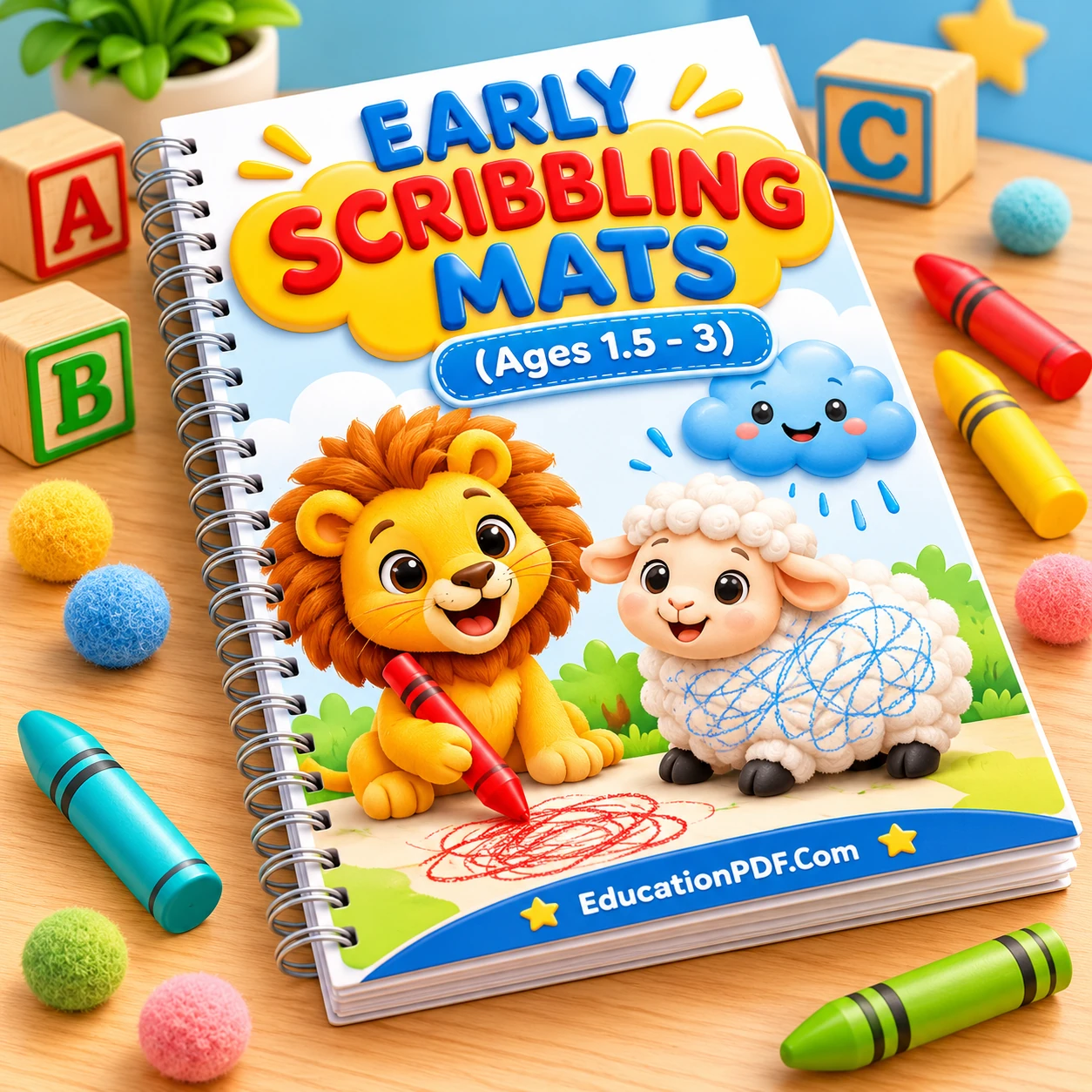
Early Developmental Scribbling & Pre-Writing Mats
11 story-driven animal activity mats plus a complete Occupational Therapy milestone guide for parents. Includes 1-click PDF and free 3D poster art!
2. Pair Physical Hand Movements with Auditory Rhythm
Young children synchronize physical hand movements directly with musical and vocal rhythm. When you pair a drawing motion with a distinct sound cue, their developing brain wires the motor pattern significantly faster.
For continuous circular swirls like yarn balls or snail shells, sing a melodic chant: “Round and round and round it goes!” For sharp zigzags or mountain peaks, switch to crisp, punchy words: “Zip! Stop! Zip! Stop!”
The word “stop” acts as an external auditory brake. It trains developing wrist muscles to decelerate without your child feeling like they are doing a rigid academic drill.
3. Ditch Thin Dotted Lines for Wide “Highways”
One of the fastest ways to kill a child’s love for learning is handing them tiny dotted letters before their hands are ready. Between ages two and four, a child’s hand lacks the millimeter accuracy needed to trace narrow paths.
Instead, use wide boundary highways. Imagine a wide winding road or a broad river where your child’s crayon is a car steering between curbs.
If their crayon bumps the edge, don’t correct them or erase the mark. Simply laugh and say: “Whoops, the car bumped the curb! Let’s steer it right back into the lane!”
💡 For the Grown-Up: The “Curb Bump” Reframe
When children draw outside the lines, their confidence is fragile. Reframing boundaries as a fun driving game removes all fear of failure and encourages them to keep practicing independently.
4. Bring in Tactile Texture Rubbings
Writing is not just visual—it is deeply tactile. When children struggle with pencil pressure, pushing too hard until the tip snaps or so lightly that marks are invisible, sensory feedback is the cure.
Peel the paper wrapper off broken crayons and use their broad flat sides. Place real items beneath the paper: crunchy autumn leaves, embossed coins, or scraps of sandpaper.
As your child rubs the crayon across the sheet, the textured veins and metal relief magically appear. This sensory payoff encourages them to calibrate their grip pressure naturally without a single lecture.
Explore our complete collection of sensory texture rubbing sheets to try this technique at home.
5. Tape Worksheets to Vertical Surfaces
Did you know that working on a flat desk is actually harder for toddlers than working on a wall? Drawing on a vertical surface automatically positions the wrist in functional extension and stabilizes the shoulder girdle.
Take your printable activity sheets and tape them to an easel, a refrigerator door, or a sliding glass window. Your child will stand tall, cross their physical midline, and recruit their core muscles as they draw.
Vertical surface play is a staple in pediatric Occupational Therapy clinics because it builds handwriting stamina in half the time.
6. Create Reusable Stations with Wipe-Clean Sleeves
Nothing dampens a child’s enthusiasm quite like the finality of a ruined piece of paper. Young children love the smooth, friction-free glide of dry-erase markers.
Slide your favorite printable worksheets into heavy-duty clear write-and-wipe dry-erase pockets. Children can color, scribble, make mistakes, and wipe the entire sheet clean with a damp cloth in seconds.
You can also use these reusable pockets for playdough centers. Invite your child to roll playdough “snakes” and form giant bubble letters or animal shapes right on the plastic mat.
7. Celebrate the Effort, Never the Perfection
Children who believe they are “bad at drawing” often stop trying before kindergarten even begins. If an adult constantly takes the crayon to show the “right way,” children quickly develop learned helplessness.
Notice the energy and intention behind their marks instead of the neatness. Say: “Look at how fast your storm clouds are raining!” or “I love those bold, strong strokes you made!”
When children feel that their marks are valued, their intrinsic motivation skyrockets. Confident children become capable, enthusiastic learners.
Get All 5 Pre-Writing Units in One Master Bundle
Download the complete 61-page Pre-Writing & Fine Motor Academy Bundle covering scribbling, directional loops, boundary highways, sensory mats, and holiday themes. Includes 56 printable activity sheets and 5 OT coaching guides!
$14.99
(Only $10.49 with checkout discount!)
Frequently Asked Questions About Early Learning
At what age should a child start learning to write?
Formal letter formation usually begins between ages four and five. However, pre-writing fine-motor development begins much earlier at 15 to 18 months through gross-motor scribbling, wrist rotation, and sensory exploration.
What should I do if my toddler refuses to color or hold crayons?
Never force a child to hold a standard pencil. Introduce chunky beeswax blocks, paint sticks, or washable dot markers, and try taping paper to an easel or window to make mark-making an active full-body game.
How can I prepare my child for kindergarten without screens?
Focus on core hand skills: cutting with child-safe scissors, peeling stickers, rolling playdough, and practicing continuous line control through wide-lane highway mats. These build the physical finger stamina required for school readiness.